

Stories
from Kappillil Nexus Partners
stop guessing what is broken, start fixing what matters.
the chapters left unheard.
what signals are getting lost in the momentum?
Contents
An issue on playing the full board. Four companies that failed in public and the chapters nobody heard; the four signals a leader can catch early; how a company is read as it really is; and what changes when it is.
- cover
- untold
- echoes
- diagnosis
- impact
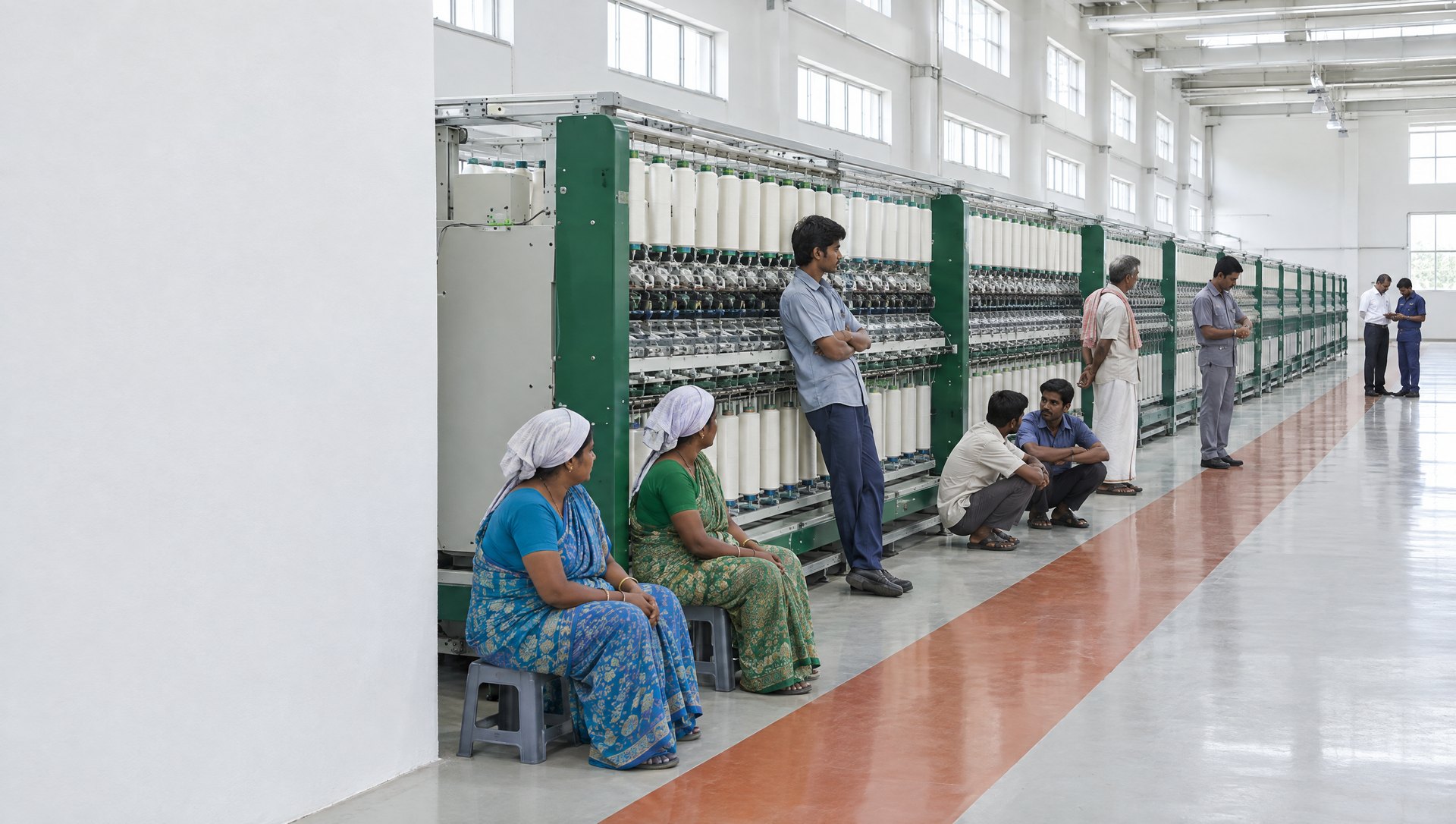
the chapters
left unheard.
behind every visible failure is a story that is rarely told in full.
turn the page
Four Indian companies that failed in public.
The country saw each failure. The chapters before the headline are the ones that explain it, and they are the ones nobody tells in full.
The product solved a real problem. The positioning created another.
the marketing misalignmentTata Nano
The Nano was a remarkable engineering achievement, designed to give millions of families a safer, more affordable alternative to a two-wheeler. But marketing it as “the world’s cheapest car” created a very different perception. In an aspirational market, a car is more than transportation: it can represent progress, achievement and status. What was meant to communicate affordability ended up creating stigma.
The product solved a real problem. The positioning created another.
the operational fractureSubhiksha
Long before quick-commerce, Subhiksha pioneered India’s neighbourhood discount retail model, rapidly scaling to more than 1,600 stores. But while the front end was growing, supply chains, finances and operations were struggling to keep pace. The warning signs were there, but expansion continued.
Subhiksha did not collapse because growth was a bad idea. It collapsed because the business grew faster than the structure supporting it.
The stores multiplied. The foundation didn’t.
Growth is not the same as a structure that can carry it.
Two more chapters, and the question every one of them leaves behind.
The system grew. Visibility disappeared.
the growth illusionTinyOwl
Backed by significant funding, TinyOwl expanded rapidly into multiple cities, acquiring customers through aggressive discounts and promotions. From the outside, it looked like market dominance. Behind the growth, however, the economics were not working. TinyOwl had built the ability to acquire customers, but not a sustainable business capable of supporting that growth.
When funding slowed, the model was exposed.
More growth did not fix the weakness. It only magnified it.
the ecosystem collapseIL&FS
IL&FS was deeply woven into India’s infrastructure and financial landscape. From the outside, it appeared formidable. Inside, layers of companies, mounting debt, interconnected obligations and weak governance made the real risks increasingly difficult to see.
When IL&FS collapsed, the consequences extended far beyond the organisation, sending shockwaves through financial markets and exposing how deeply interconnected the system had become.
The system grew. Visibility disappeared.

what signals are
getting lost in the
momentum?
four possibilities worth looking into.
turn the page
Failure rarely happens in silence. It leaves clues.
Four places where the signal goes quiet long before the numbers do.
An organisation may intend to walk north while its structures reward it for running south.
marketingThe marketing echo
A brand promises a compelling experience. Customers arrive, but somewhere behind the promise, internal operations are struggling to deliver it. Marketing keeps moving forward while delivery moves at a different pace. Acquisition becomes expensive, churn begins to rise, and the gap between promise and experience grows.
operationsThe operational echo
Growth brings new targets, new teams and new responsibilities. Department by department, the numbers may look healthy, yet profitability slips and projects take longer. Somewhere between the front lines and the boardroom, information becomes filtered, delayed or distorted. The larger the organisation becomes, the further the reality on the ground can travel from the picture reaching leadership.
strategyThe strategy echo
An ambitious strategy creates momentum. Targets are set, capital is deployed and expectations rise. But people, processes, resources and economics must move with that ambition. When they cannot, growth can continue on paper while the foundation struggles underneath it. Capital can accelerate growth; it cannot automatically create the capability required to sustain it.
governanceThe governance echo
An initiative can look sound from inside the organisation. Then the wider ecosystem responds: a regulator raises a concern, a stakeholder pushes back, a community questions the direction or a partner sees a different risk. These may not be obstacles that appeared suddenly; they may have been signals that were never part of the original picture.

what is actually
happening across
the ecosystem?
before we intervene, we must understand the space between where you are and where you want to be.
turn the page
We listen before we assess.
We look at your organisation as it is, not as it is supposed to be. Beyond individual departments, to the bigger picture.
What appears to be a problem in one area may have its roots somewhere else.
findWhere we begin
Every organisation has a version of itself on paper and another version that exists in practice. The difference is often found in conversations, decisions, workarounds and small frictions that rarely appear in a report. That is where diagnosis begins: by understanding the organisation as it really is, before deciding what needs to change.
engageWhat connects
A problem rarely stays where it first appears. A decision made at the top can create friction somewhere else, a process can quietly work against a strategy, and two teams can be moving with equal commitment in different directions. The question is not simply what is wrong, but what is connected to what and where the disconnect begins.
impactWhat lies beneath
A visible problem is often only the symptom. A missed opportunity may have started much earlier, a performance issue may have a different cause than expected, and what looks like a departmental problem may actually sit between departments. Diagnosis means looking beneath the obvious until the real picture begins to emerge.

from scattered
potential to
structured impact.
find perfect alignment. turn distinct initiatives into a cohesive whole.
turn the page
Where we come in.
Not with a fixed answer, but with the experience and perspective to look at the challenge from the right place. Four capabilities, guided by what the diagnosis reveals.
The point is not to have a good strategy. It is to see something change because of it.
comprehensive ecosystem auditingSee the whole board.
A business rarely moves one piece at a time. Markets affect customers. Customers influence decisions. Strategy determines priorities. Resources follow those priorities. Marketing creates expectations. Operations have to deliver them. An ecosystem audit brings those pieces into one view: from the wider environment and market through strategy, organisation, resources, marketing activity and results.
The whole board often reveals what the individual pieces cannot.
consultancyMake sense of what is complicated.
Some challenges are not difficult because there is no answer. They are difficult because the situation has become complicated, the choices have multiplied, or the question itself has become blurred. An independent examination of the challenge, the options and the possible paths forward brings the clarity needed to make the next decision.
Sometimes the first step is not finding the answer. It is understanding the right question.
marketing strategyConnect the business to the market.
A good product can exist without finding its market. A strong story can be told without reaching the people who matter. Marketing strategy brings market position, relevance, audiences, channels and opportunities together and connects them back to the objectives of the business.
Being present in the market is not the same as being relevant to it.
government advisoryUnderstand the larger landscape.
The board does not end at the organisation's boundaries. Policy, institutions and regulation shape how businesses operate, what changes around them and where opportunities emerge. Understanding that larger environment brings another dimension to strategic thinking, particularly when business decisions intersect with government, institutions or regulation.
Sometimes the move that matters is shaped beyond the organisation itself.
Let’s talk.
The answers may not always be obvious. The right combination of expertise can help find them. No form, no funnel: write or call, and you will be talking to the people who do the work.
- emailnexus@kappillil.com
read by the partners, answered within a working day.
- phone+91 (number to come)
Chennai, 10:00 to 18:00 IST.
- whatsappmessage on WhatsApp
for a first conversation, not a pitch.
Who you will be talking to
Kappillil Nexus Partners is a small team. The people who read your organisation are the people you meet. Photographs and roles follow once the partners send them.
Kappillil Nexus Partners LLP, T-1 Phlox Apartment, Q 104, 3rd Avenue, Anna Nagar, Chennai 600040. Stories, issue one, October 2026. This site sets no tracking cookies. Privacy.